Vitamin D and Boron for Men: What the Numbers Actually Mean
Adult men need 15-20 mcg (600-800 IU) of vitamin D a day, under a 100 mcg upper limit; boron has no set RDA, but a small trial used 10 mg against a 20 mg upper limit. Horse Fuel's 84 mcg of vitamin D3 and 7 mg of boron sit within those ranges. A blood test called 25-hydroxyvitamin D shows whether you are actually low.
Vitamin D and boron for men: what they do, and how much is enough?
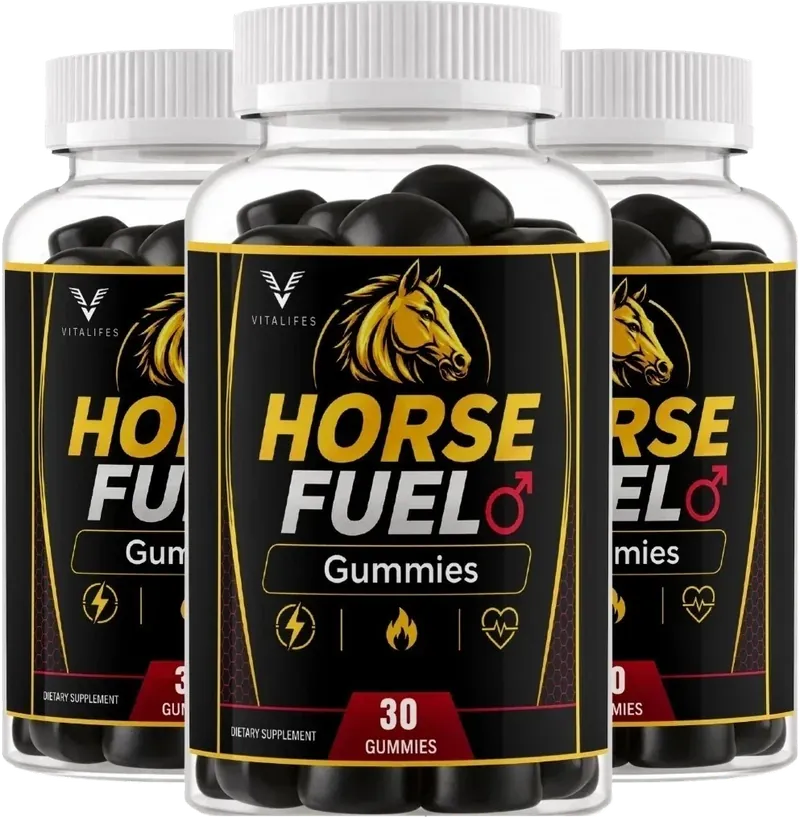
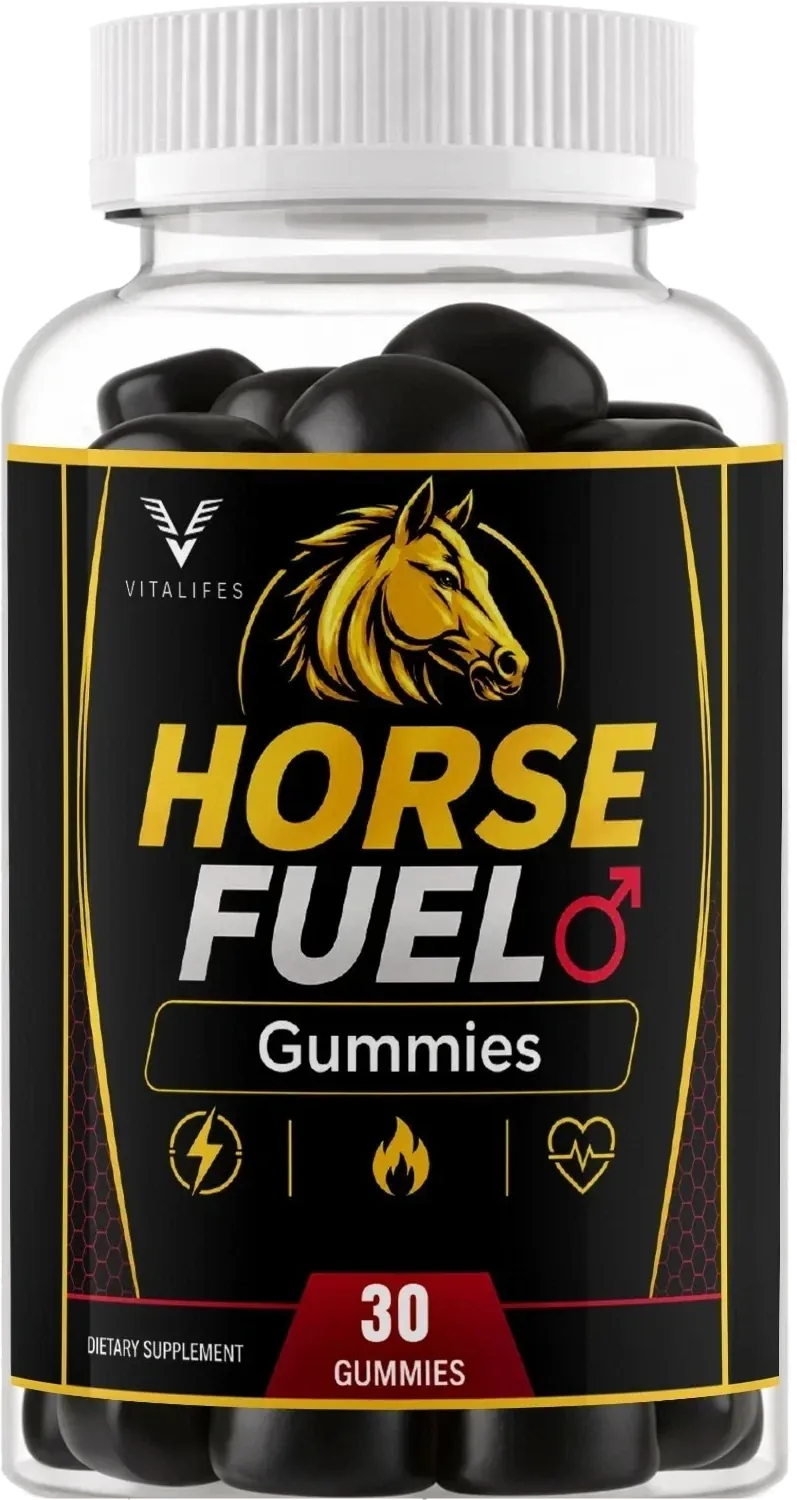
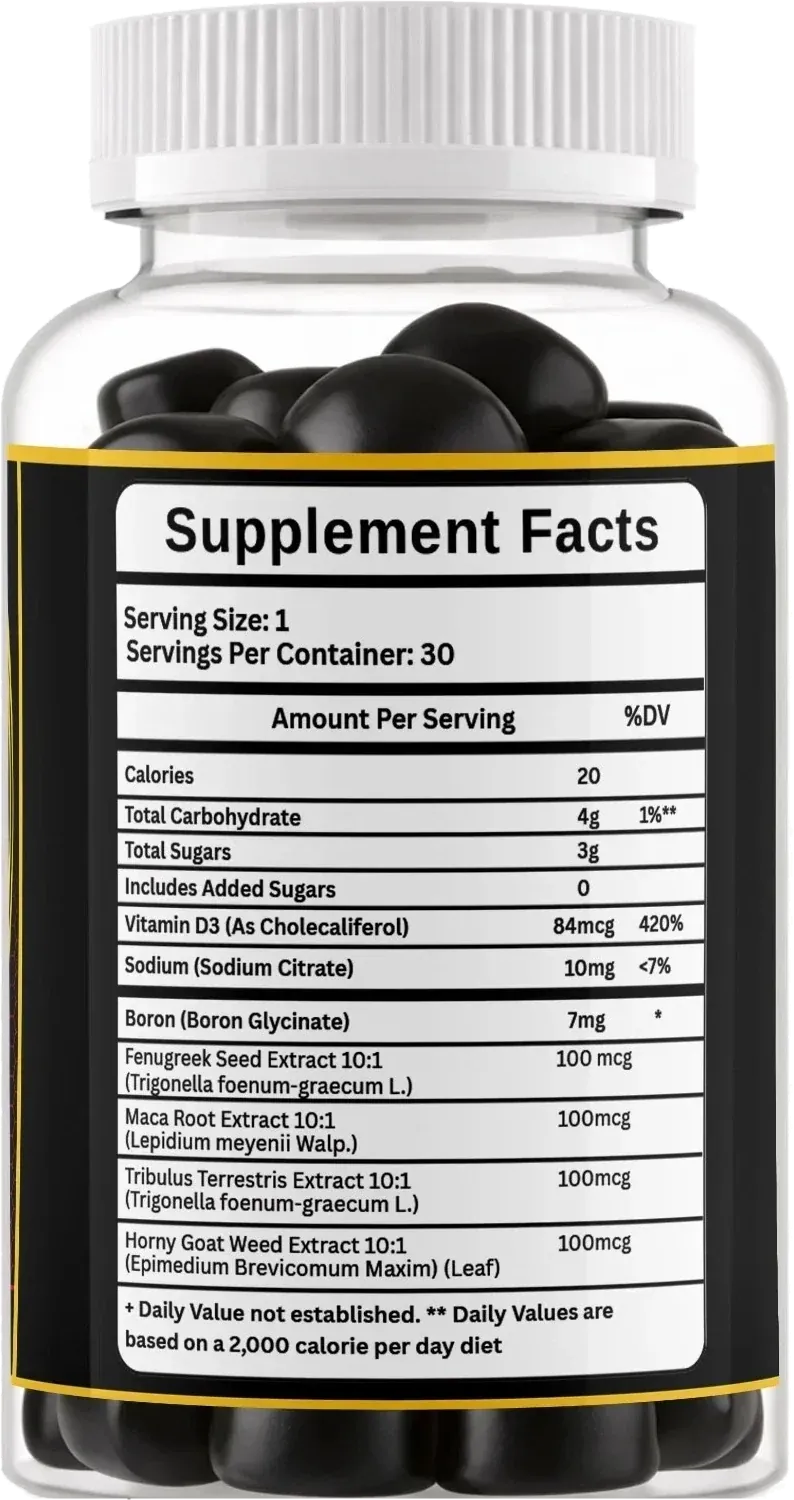
Vitamin D and boron sit at opposite ends of the supplement-label spectrum. One is a well-studied vitamin most men do not get enough of. The other is a trace mineral most men have never heard of, backed by a handful of small studies. Both show up on the Horse Fuel label at real, checkable amounts: 84 mcg of vitamin D3 and 7 mg of boron per gummy.
This guide walks through what each one actually does, how much adults need, who is most likely running low, how a doctor checks your level, and how Horse Fuel's two amounts line up against the official numbers.
What do vitamin D and boron actually do?
Vitamin D3
Vitamin D helps the body absorb calcium and phosphorus for bone strength, supports muscle function, and plays a role in immune signaling (National Institutes of Health, 2024). Skin makes it when sunlight hits bare skin, and it is naturally present in very few foods (fatty fish and egg yolks are two of the better sources), which is why many people rely on fortified foods or a supplement to reach a useful level.
Boron
Boron is a trace mineral found in fruits, vegetables, nuts and legumes. It has no confirmed biological role the way vitamin D does, but small human trials have looked at whether it shifts steroid hormone levels and inflammation markers over short periods (Naghii et al., 2011). Research on boron is much thinner than on vitamin D, so think of it as an emerging trace mineral rather than an established nutrient with a settled function.
How much vitamin D and boron do men need, and where is the limit?
| Nutrient | Typical adult need (RDA) | Adult upper limit (UL) | Horse Fuel, per gummy |
|---|---|---|---|
| Vitamin D3 | 15 mcg (600 IU); 20 mcg (800 IU) over age 70 | 100 mcg (4,000 IU) | 84 mcg (3,360 IU), 420% DV |
| Boron | No RDA set; 10 mg/day used in one short trial | 20 mg | 7 mg |
Two different kinds of numbers matter here. The RDA is the amount that covers most healthy people's daily need. The upper limit (UL) is the ceiling you should not cross on a regular basis, from all sources combined, food, fortified drinks, a multivitamin and any single-nutrient supplement.
For vitamin D, adults need 15 to 20 mcg a day and should stay under 100 mcg a day (National Institutes of Health, 2024). Going over the limit for a long stretch, almost always from supplements rather than sun or food, can raise blood calcium too high, a condition called hypercalcemia, with symptoms such as nausea, vomiting, muscle weakness and, in severe cases, kidney problems.
Boron has no set RDA. The one small trial giving healthy men 10 mg a day for a week found short-term changes in free testosterone, estradiol, DHT, cortisol and some inflammation markers (Naghii et al., 2011). The adult upper limit is 20 mg a day; NIH ODS reports no adverse effects from ordinary food and water boron intake, and notes that only very large accidental doses (in the thousands of milligrams) have caused real harm (National Institutes of Health, 2024).
Who tends to run low on vitamin D or boron?
Vitamin D status depends mostly on sun exposure and diet, so several groups are more likely to test low:
- Men who spend most daylight hours indoors, at a desk or in a windowless job
- Men with darker skin, since more melanin slows the skin's vitamin D production
- Men who are overweight, since vitamin D is stored in body fat and less reaches the bloodstream
- Men in northern latitudes or cloudy climates, especially in winter
- Men over 60, whose skin makes vitamin D less efficiently
- Anyone with a digestive condition that limits fat absorption, since vitamin D is fat-soluble
Boron is different: there is no defined "boron deficiency" the way there is for vitamin D. Diets low in fruits, vegetables, nuts and legumes will simply carry less boron, but researchers have not agreed on a level that counts as deficient. If you eat a varied diet with some produce, you are probably getting a baseline amount already.
How do you find out your vitamin D level?
Vitamin D status is checked with a simple blood test, usually called a 25-hydroxyvitamin D or "25(OH)D" test. Ask your doctor for it at a routine check-up, especially if you fit one of the risk factors above or have felt low on energy for weeks rather than days.
| Result range (roughly) | What it generally means |
|---|---|
| Below about 12 ng/mL (30 nmol/L) | Commonly called deficient |
| About 12-20 ng/mL (30-50 nmol/L) | Commonly called insufficient |
| About 20 ng/mL (50 nmol/L) and up | Commonly considered sufficient for most people |
There is no routine blood test for boron status; it is not part of a standard panel, and clinicians do not currently use a boron level to guide supplement decisions the way they do with vitamin D.
If a test shows you are low, that is exactly the group most likely to notice a benefit from vitamin D repletion. If your level already tests sufficient, extra vitamin D on top of a normal diet is less likely to change much (Martineau et al., 2017).
How does Horse Fuel's 84 mcg and 7 mg compare to the official numbers?
Horse Fuel prints both amounts on the Supplement Facts panel, so you can put each one next to the official numbers without guessing.
Vitamin D3: 84 mcg (3,360 IU), 420% DV
This is 4 to 5.6 times the RDA of 15-20 mcg, and under the 100 mcg adult upper limit (National Institutes of Health, 2024). It is a real, meaningful dose. If you already take a separate vitamin D supplement, a multivitamin with added D, or drink a lot of fortified milk or juice, add those amounts to this 84 mcg before deciding whether you need more.
Boron: 7 mg
This sits below the 10 mg used in the one short human trial and well under the 20 mg adult upper limit (Naghii et al., 2011, National Institutes of Health, 2024). It is a plausible, low-risk amount, though the research behind boron and hormones is still early and based on a very small study.
Compared with the four herbal extracts on the same label, which are dosed at 100 mcg (0.1 mg) each, vitamin D3 and boron are the two ingredients in Horse Fuel dosed at levels that match real nutrition science. Full context on why the herbs are so much smaller: mcg vs. mg on supplement labels. For every ingredient and amount on the bottle, see the Supplement Facts breakdown or the full ingredients list.
Should you supplement both vitamin D and boron?
Vitamin D has the stronger case: adults need it daily, most people who avoid sun or fortified food run low, and the RDA-to-UL range is well established. A daily amount in the 15-100 mcg range, taken with a meal that has some fat, is a reasonable way to close that gap.
Boron is the more speculative pick. A 7 mg dose is unlikely to cause harm for a healthy adult, and it sits comfortably under the 20 mg upper limit, but the hormone research behind it comes from one small, short trial (Naghii et al., 2011), not a body of confirmed evidence.
Either way, a gummy is a top-up, not a foundation. Sleep, daylight and food do more of the daily work; see our guide to daily energy habits for men for the habits worth building first, or browse the full Horse Fuel blog for more label breakdowns. If you take medicine for blood thinning, diabetes, or a hormone-related or heart condition, or if you already take vitamin D, check with your doctor before adding a new supplement, and see our side effects page for the full caution list.
Questions readers ask
How much vitamin D do adult men need a day?
The RDA is 15 mcg (600 IU) for most adults and 20 mcg (800 IU) for adults over 70. The upper limit is 100 mcg (4,000 IU) a day from all sources combined (National Institutes of Health, 2024).
What is the upper limit for boron?
NIH ODS sets the adult Tolerable Upper Intake Level for boron at 20 mg a day (National Institutes of Health, 2024). A small trial studied 10 mg a day for one week (Naghii et al., 2011).
Is 84 mcg of vitamin D3 too much?
It is under the 100 mcg adult upper limit, but it is well above the RDA. If you already take a separate vitamin D supplement or a multivitamin with added D, add up your total daily intake and check with your doctor if it looks high.
How do I know if I'm low on vitamin D?
A blood test called 25-hydroxyvitamin D (25(OH)D) measures your level. Ask your doctor for it, especially if you get little sun, have darker skin, are over 60, or are overweight.
Is there a blood test for boron?
No. Boron is not part of a standard blood panel, and there is no agreed level that counts as deficient the way there is for vitamin D.
Does boron really raise testosterone?
One small trial of 8 healthy men found free testosterone rose and estradiol fell after 10 mg a day for a week (Naghii et al., 2011). It is an early, promising finding from a very small study, not a confirmed effect.
Who is most likely to be low in vitamin D?
People who get little sun, have darker skin, are overweight, are over 60, live in northern or cloudy climates, or have a condition that limits fat absorption.
How does Horse Fuel's dose compare to a plain vitamin D supplement?
Horse Fuel's 84 mcg is on the higher end for a single-ingredient product, but still under the 100 mcg upper limit. A plain vitamin D3 supplement can come in a wide range, often 25-125 mcg, so compare the label of any product you consider against your own total daily intake.
Keep reading
Daily energy habits for men
Sleep, daylight, food, movement, hydration and alcohol: the six habits that drive men's energy, when to see a doctor, an...
Read →mcg vs. mg on supplement labels
The math behind mcg, mg and IU on labels, why 10:1 extracts still look tiny, and how Horse Fuel's 100 mcg herbs compare ...
Read →How much does Horse Fuel cost?
Pack sizes, days of supply and how to pick the right one.
Read →Order Horse Fuel from the authorized retailer
30 gummies per bottle, 1 a day. Packs of 3 or 6 bottles run from $10.92 a bottle on the listing, with 30-day returns. Questions first? Our contact page explains who answers what.