Choosing a Men's Energy Gummy: A Six-Point Checklist
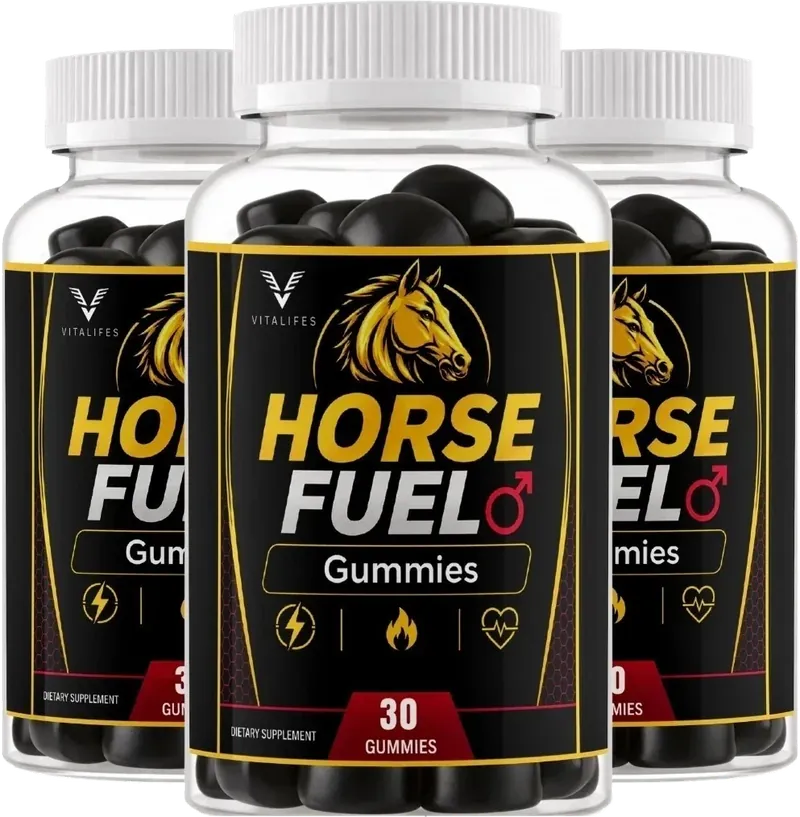
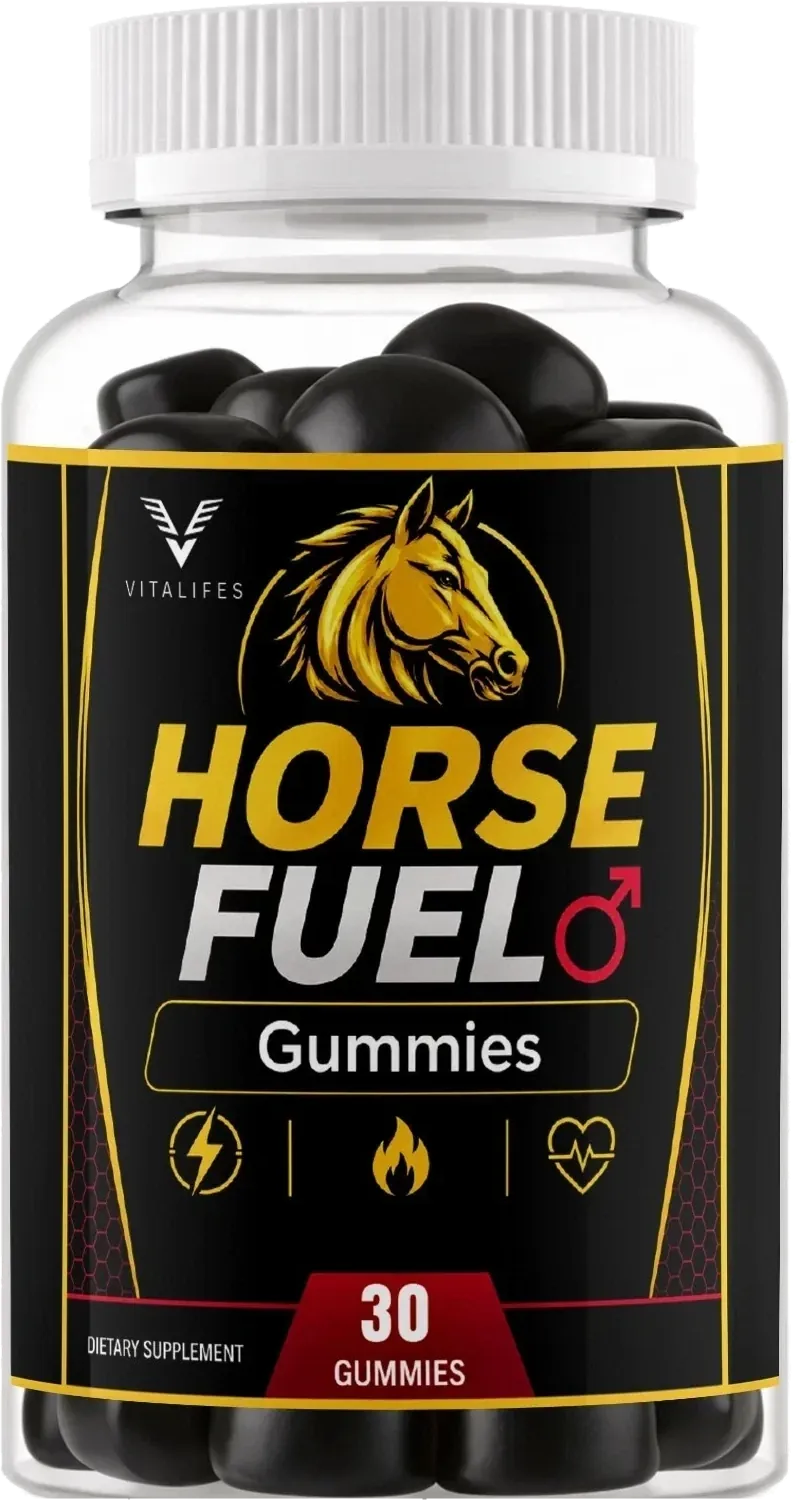
Before buying any men's energy gummy, check six things: printed amounts vs. a vague blend, mcg vs. mg, total vitamin D from all sources, sugar per gummy, correct Latin names, and the real return window and seller. This checklist walks through each one using general product types, then checks Horse Fuel against its own label.
Check 1: printed amounts vs. a vague blend
The single biggest tell is whether a label prints each amount. A fully disclosed gummy label lists a number next to every active ingredient. A vague label lists a blend name with no amounts, or leaves an ingredient off the Supplement Facts panel entirely.
A gummy with printed amounts lets you check each one against a real research dose or daily need. A blend with no amounts means you are trusting the maker's judgment on the mix, with nothing to check it against.
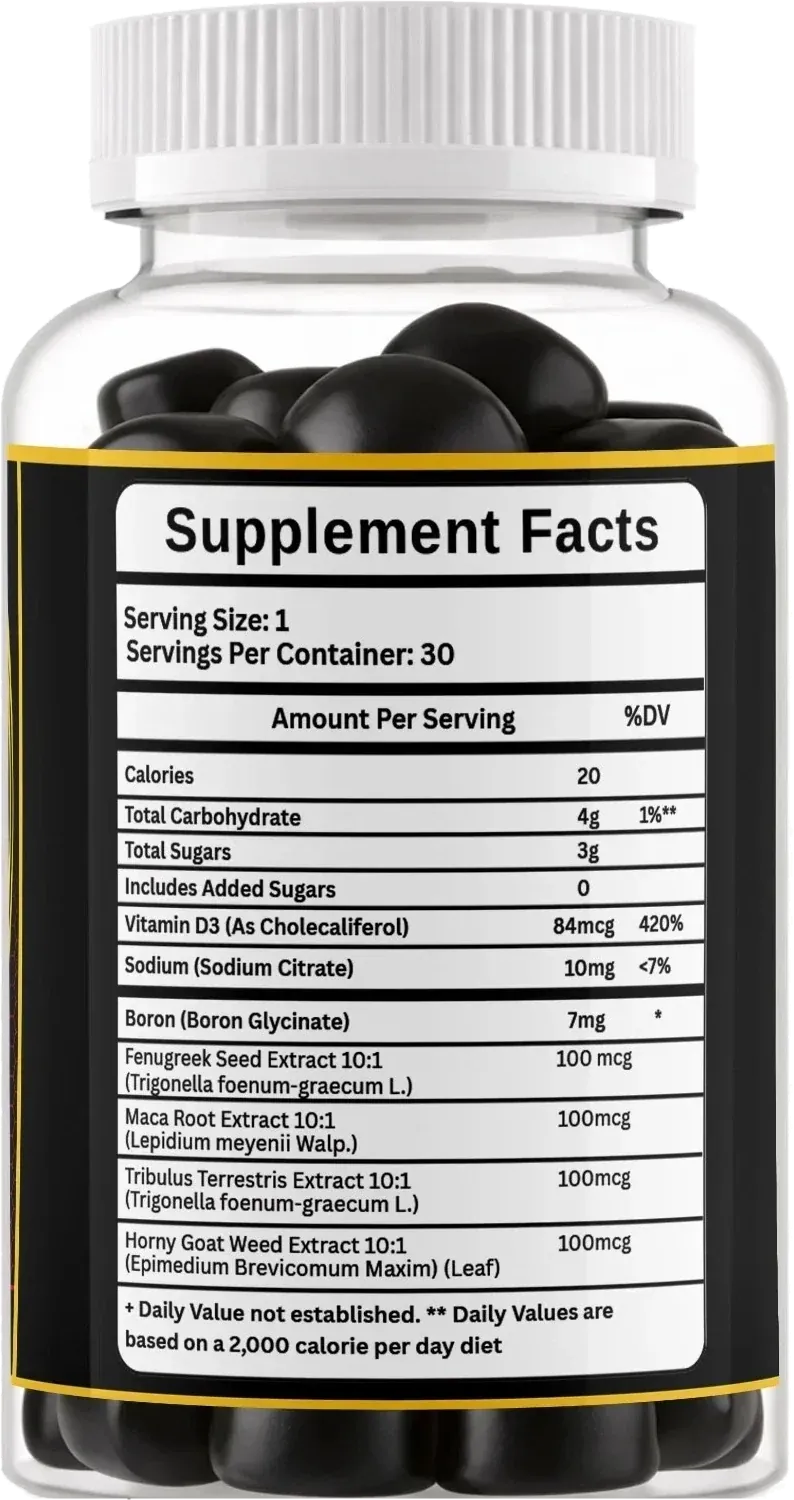
Horse Fuel prints an amount next to all six ingredients on its Supplement Facts panel: vitamin D3, boron, and four 10:1 herbal extracts. That is the honest starting point, even before you look at whether any single amount is large enough to matter.
Check 2: mcg vs. mg, read it twice
The unit next to a number matters as much as the number itself. A milligram (mg) is 1,000 times bigger than a microgram (mcg). Mixing them up, or skimming past the small print, can make a tiny dose look bigger than it is.
| Unit | What it equals | Common mistake |
|---|---|---|
| 1 mg | 1,000 mcg | Reading "100 mcg" as if it were "100 mg", which is 1,000 times more |
| 100 mcg | 0.1 mg | Assuming a 100 mcg herbal extract is a meaningful dose without checking the research amount |
| 7 mg (boron, this label) | 7,000 mcg | Comparing a milligram mineral dose directly against a microgram herb dose |
Horse Fuel's four herbal extracts, fenugreek, maca, tribulus and horny goat weed, are each listed at 100 mcg. That is 0.1 mg. Fenugreek's human testosterone research used 250-600 mg a day of extract (Mansoori et al., 2020), thousands of times more than 100 mcg. Reading "100 mcg" as "100 mg" would hide that gap completely.
A quick habit: whenever you compare a gummy's label to a study, write both numbers in the same unit before you compare them. It takes ten seconds and it is the single easiest way to catch an oversized marketing claim.
Check 3: total vitamin D from every source
Vitamin D is common in men's gummies, and it is also the easiest ingredient to accidentally overdo, because it can hide in a multivitamin, fortified milk or orange juice, and a separate vitamin D supplement all at once.
Add these up before you buy
- Vitamin D in any daily multivitamin you already take
- Vitamin D in a separate vitamin D supplement
- Vitamin D listed on fortified foods you eat often
- The vitamin D in the gummy you are considering
Numbers to know
- Adult daily need: 15-20 mcg (NIH, National Institutes of Health, 2024)
- Adult upper limit: 100 mcg (NIH, National Institutes of Health, 2024)
- Horse Fuel: 84 mcg per gummy, 420% DV
- Two of these gummies a day would total 168 mcg, over the upper limit
A high vitamin D dose is not automatically dangerous, but it leaves little room for other sources. Total, not just the gummy bottle, is what actually matters to your body.
Check 4: sugar per gummy, and what is not shown
A gummy is candy-shaped by design, and some brands lean into that with real sugar content. Checking the Supplement Facts panel, not just the marketing photo, tells you what you are actually chewing.
| What to check | Horse Fuel (per gummy) | Why it matters |
|---|---|---|
| Calories | 20 | Small on its own, but adds up if you eat several gummy supplements a day |
| Total sugars | 3g | Real sugar, even if the flavor is mild |
| Added sugars | 0g listed | Some brands add far more; check this line specifically, not just "total sugars" |
| Other ingredients (base, colors, flavors) | Not shown on the photographed label | Worth asking the seller if you have an allergy or follow a vegetarian diet |
Three grams of sugar in one gummy is not large, but it is not zero either. If you take other gummy supplements through the day, the total can climb faster than you would expect from any single label.
Check 5: do the Latin names actually match?
A Supplement Facts panel usually prints a plant's Latin name under its common name. That Latin name is how you confirm the label is naming the plant it claims to contain, since common names can be reused across different species.
On the Horse Fuel label, the Tribulus Terrestris line prints Trigonella foenum-graecum L., which is fenugreek's Latin name, not tribulus's own. It is the same Latin name that already appears correctly under the fenugreek line above it. That is a labeling error worth knowing about before you buy, even though it does not tell you whether the gummy itself contains tribulus, fenugreek, or something else.
If a Latin name looks copied from another ingredient on the same label, that is a reasonable reason to ask the seller before you order, not after the bottle arrives. See our full label breakdown for the exact wording, line by line.
Check 6: return window, price per day, and who the seller is
A generous-sounding guarantee on the bottle seal does not always match the return window printed on the listing, and the seller behind a gummy matters as much as the gummy itself.
| Question | Why it matters |
|---|---|
| How many days do I have to return it? | Vitamin D takes weeks to build up; a short window can close before you know if it suits you |
| Who pays return shipping? | The listing's own terms decide this, not just the seal on the bottle |
| Is the seller the maker, or a retailer? | A retailer can help with orders and returns but is not the one who formulated the product |
| What is the price per day, not just per bottle? | Bigger packs often lower the per-bottle price, but only pay less per day if you finish the pack |
On horsefuels.com, the listing prints a 30-day return window and says the seller pays return shipping, and Horsefuels is USA Authorized Horse Fuel Retailer, not the maker (Vitalifes). Price per day is the fairest way to compare packs, including across different brands: divide the total order price by the number of days it actually lasts at the labeled serving.
How the main gummy types compare
| Feature | Fully disclosed gummy | Single-ingredient extract | Typical vague blend |
|---|---|---|---|
| Amounts shown per ingredient | Yes | Yes (one ingredient) | Usually no |
| Easiest to check against research | Yes | Yes | Hardest |
| Number of active ingredients, typically | 3-8 | 1 | 5-15 |
| Price, typically | Mid to higher | Varies widely | Often lower per bottle |
| Best for | Wanting to verify every dose | Wanting one ingredient at a known dose | Trying several traditional ingredients at once |
None of these categories is automatically the "right" choice. A fully disclosed label is easiest to verify. Applying these six checks to Horse Fuel itself: it passes the printed-amounts check, the vitamin D and boron doses are real, and the four herbs and the Latin-name error are the honest weak spots. See our own Horse Fuel ingredients breakdown for how it stacks up, dose by dose.
A short buying process you can reuse
Read the Supplement Facts photo first
Not the listing description. Check for printed amounts, the mcg vs. mg units, and total vitamin D.
Add up your total vitamin D
Count the gummy, any multivitamin, and fortified foods, then compare the total to the 100 mcg adult upper limit.
Check the Latin names against each other
If two different ingredients share the exact same Latin name, that is a labeling error worth asking about.
Check the return window and the seller
Confirm the days, who pays return shipping, and whether you are buying from the maker or an authorized retailer.
Run any product, including Horse Fuel, through these six checks before you order. Our own men's energy guide covers the habits that matter even more than the gummy choice. None of these six checks takes more than a few minutes, and together they catch most of the red flags that turn a reasonable-sounding listing into a disappointing order.
Choosing a Gummy: common questions
What is the difference between a disclosed dose and a vague blend?
A disclosed dose lists an amount next to each ingredient. A vague blend lists no amount, or leaves an ingredient off the Supplement Facts panel.
Is 100 mcg the same as 100 mg?
No. 1 mg equals 1,000 mcg, so 100 mcg is only 0.1 mg, a thousand times smaller than 100 mg.
How much vitamin D is too much?
The adult upper limit is 100 mcg (4,000 IU) a day from all sources combined (National Institutes of Health, 2024). Add up every source, not just one gummy.
How do I check if a Latin name is correct?
Compare it to the ingredient's other listed occurrences on the same label, and look it up if it seems copied from a different ingredient.
Does sugar matter in a gummy supplement?
Yes. Check total sugars and added sugars on the Supplement Facts panel, not just the flavor description in the listing.
Who pays for returns if the gummy doesn't work for me?
It depends on the listing. Read the actual return terms, including who pays return shipping, before you order a large pack.
Does this checklist apply to Horse Fuel too?
Yes. Horse Fuel prints every amount and has real vitamin D3 and boron doses, but its four herbs are tiny and one Latin name is wrong.
How do I compare price fairly between packs?
Divide the total price by the days of supply at the labeled serving size, not just by the number of bottles.
Keep reading
What are the ingredients in Horse Fuel?
See how one real gummy label holds up against this checklist.
Read →What actually helps men's energy?
Sleep, daylight, food, movement and alcohol habits that matter more than any gummy.
Read →How much does Horse Fuel cost?
Pack sizes, totals and price per day from the marketplace listing.
Read →Order Horse Fuel from the authorized retailer
30 gummies per bottle, 1 a day. Packs of 3 or 6 bottles run from $10.92 a bottle on the listing, with 30-day returns. Questions first? Call +1 (302) 200-3480.